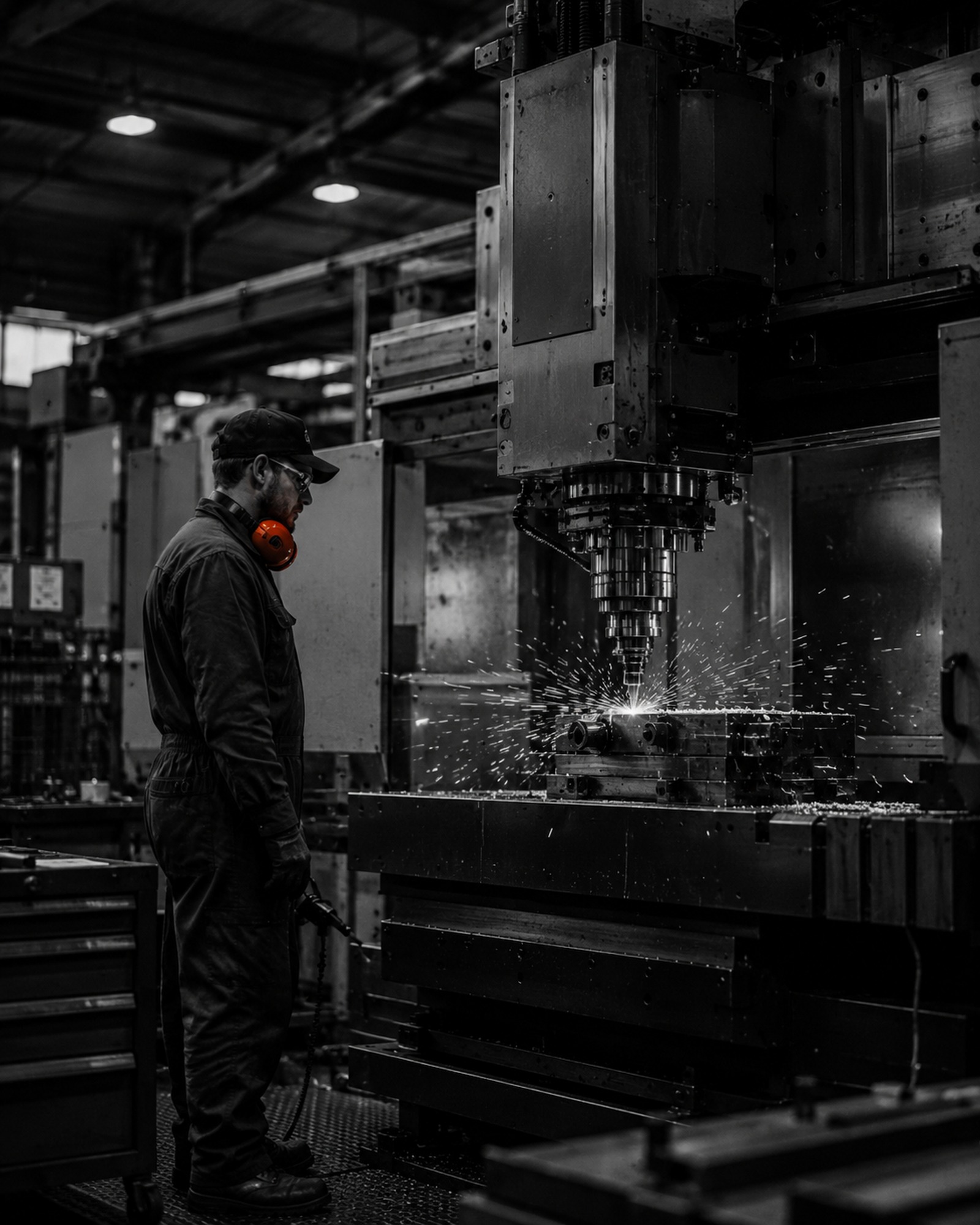
Precision to the thousandth. Every time.
CNC machinists turn raw stock into parts that fly, drive, and hold together — precision manufacturing that never left, it just got harder to staff. This guide breaks down real pay by experience level and what actually moves the number.
CNC Machinist
The U.S. Bureau of Labor Statistics tracks this trade under "machinists" — that category posted a median annual wage of $56,150 as of May 2024, the most recent OEWS data available. The BLS also projects employment growth of a projected 2% decline in headcount from 2024 to 2034 due to automation efficiency, but still about 34,200 openings a year driven by retirements.
Entry level ($18–23/hr) is where most people start in this trade — typically through a formal apprenticeship, trade school program, or on-the-job training under a journeyman.
Journeyman ($26–36/hr) is where independent, unsupervised work authority kicks in — the point where most of the trade's workforce sits.
Master / top end ($38–52+/hr) covers senior specialists and crew leads — the people called in when the job is too complex or too urgent for anyone else.
Machinists who can program multi-axis toolpaths, not just run them, earn significantly more than operator-only roles.
Aerospace, medical device, and defense machining pay well above general fabricated-metal work.
Tool and die makers — the most advanced machining specialty — earn the highest wages in the field.
Night-shift and weekend production runs carry meaningful pay premiums in most shops.
“You set the program, run the first piece, measure it to the ten-thousandth, and you're the reason the part fits.”
— A day in the life, CNC Machinist
Two-way street. Workers get matched to real openings. Employers get first look at qualified cnc machinist talent before we go public with the board.
Jobs In CNCMachinist is one of 13 trade-specific sites in the Careers In Trades network.